Digital Expansion & Corporate Web Solutions for Madinah Businesses
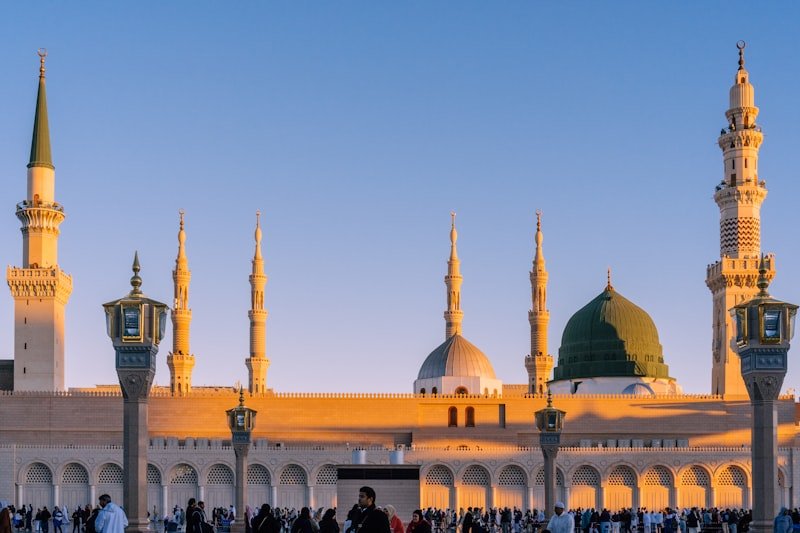
Madinah supports three quite different commercial audiences at once, and most marketing here underperforms because it tries to address all of them on the same pages.
There are visitors, who typically stay longer and plan more calmly than in Makkah. There is a substantial resident economy — healthcare, education, retail, professional services — that behaves like any established Saudi city. And there is a growing B2B layer around hospitality supply, logistics, construction and facilities management, serving both of the above.
These audiences search differently, in different languages, with different urgency. Separating them is the first strategic decision.
Hospitality: a calmer, longer decision
Visitors to Madinah generally spend longer and decide with less time pressure than in Makkah, which changes what content earns the booking. Detail is rewarded. Practical questions get researched properly: what the walk to the Prophet's Mosque is actually like at different times, which entrance a location is nearest, what the area around the Markaziyah central district offers, what transport to and from Prince Mohammad Bin Abdulaziz International Airport involves, what a longer stay costs in practice.
Operators who answer those questions concretely build trust before the booking page, and trust is what persuades someone to book direct rather than through a platform.
The language approach mirrors the visitor mix. Arabic and English form the base; add further languages only where your own booking records show meaningful demand, and add them properly rather than by machine translation. The method is the same as for Makkah hospitality marketing, with a longer research window to work with.
The resident economy
This is the part most frequently neglected, and it is often the more reliable revenue. Clinics, schools, specialist retail, repair services, legal and accounting practices in Madinah are found the way they are found anywhere in Saudi Arabia: through Arabic search and the map pack.
The work is unglamorous and effective:
- A Google Business Profile completed in Arabic, with the correct primary category and services written in the words customers use.
- Hours that reflect prayer times, Friday and Ramadan, because "open now" filters a large share of mobile searches.
- Reviews accumulated steadily and replied to in Arabic.
- A location page on your site with matching details, structured data, a map and directions a resident would recognise.
- Arabic service pages written by a native speaker, covering what you do, what it costs and what happens next.
Businesses serving residents often make the mistake of marketing to visitors because that market feels larger. For a dental clinic or an accountancy practice, the resident market is the business and the visitor market is a distraction.
B2B and contract work
Supplying hotels, institutions and developments is a different motion again: fewer buyers, larger contracts, procurement processes, and decisions made on capability and reliability rather than price alone.
What works:
- Pages organised around what you actually supply or deliver, with capacities, certifications, coverage and response times stated.
- Evidence of reliability — scale of operations, equipment, team, accreditations — presented factually rather than as adjectives.
- Clarity on credentials. Commercial registration, the national address format where you hold it, and relevant sector licensing. Display only what is genuine; Saudi buyers verify as routine.
- A reachable human. Procurement enquiries in this market are frequently made by phone or WhatsApp, and the supplier who answers first is often the one who gets the opportunity to quote.
Search volumes for these terms are low. That is not a reason to skip the work — a single contract can justify a year of it — but it does mean judging performance on enquiries and quotations rather than traffic.
The website as the credibility check
Across all three audiences, the site is where a decision gets confirmed or quietly abandoned. The recurring problems are the same ones everywhere: slow loading on mobile connections, Arabic that reads as translated, a contact page with a form and nothing else, and no sign of recent activity.
Fixing these is routine work with disproportionate return. Serve the site from close to your audience, compress heavy images, have the Arabic written by a person, handle right-to-left layout properly rather than by flipping direction, and make it obvious how to reach someone. Our web design and CRO service covers this, and the performance side is in why page speed kills conversions.
What to avoid
- One page addressing visitors, residents and procurement at once. It persuades none of them.
- Machine-translated Arabic or bulk language versions nobody maintains.
- Overstated proximity claims, which cost more in reviews than they earn in bookings.
- Treating the visitor market as the only market when your actual customers are local.
- Implying official affiliation with religious or government bodies.
Frequently asked questions
Should a Madinah business market in English?
If you serve visitors, yes, alongside Arabic. If your customers are residents or local businesses, Arabic is the priority and English is secondary. Let your actual customer base decide rather than assumption.
Is it worth competing with booking platforms?
Not on broad category terms. It is worth owning your own name, your specific location questions and the planning content platforms do not write, and converting that attention into direct bookings.
How do we market B2B services with such low search volume?
Accept the volume and optimise for relevance. A handful of pages that precisely match how buyers describe what they need, plus credentials that survive verification, plus fast response. Judge on quotations, not sessions.
How long until we see results?
Profile and local search improvements within weeks. Arabic organic rankings for commercial terms typically three to six months, often faster than in Riyadh because competition is lighter. B2B pipelines follow the contract cycle.
Next steps
Decide which of the three audiences actually pays your bills, and check whether your site has a proper page for them in the language they search. Most Madinah businesses find the answer is no for at least one audience that matters.
Our Saudi Arabia SEO and Saudi digital marketing pages set out the work, and the market-wide view is in the Saudi Arabia digital marketing playbook. Send us your site for a written assessment.
Want More Actionable Growth Strategies?
Join hundreds of founders and marketing directors getting our weekly search and ad performance breakdowns.